

Here's a question we get all the time: "I put on my new transition lenses inside and they didn't get dark — are they defective?" The short answer is no. Photochromic lenses have one trigger, and it isn't your living-room light. It's the sun.
It's all about UV
Transition (photochromic) lenses darken when they're hit by ultraviolet light. The sun pours out UV; indoor bulbs barely produce any. On top of that, the glass in your windows and your car's windshield filters most UV out — so a lens sitting indoors or behind glass has nothing to react to. That's not a flaw; that's the chemistry doing its job.
Watch the 30-second testWatch Walleva transition lenses darken in seconds under direct sun, then clear up again in the shade. You'll get the same result outdoors — but not indoors or through a windshield, where UV can't reach them.▶ Watch on YouTube →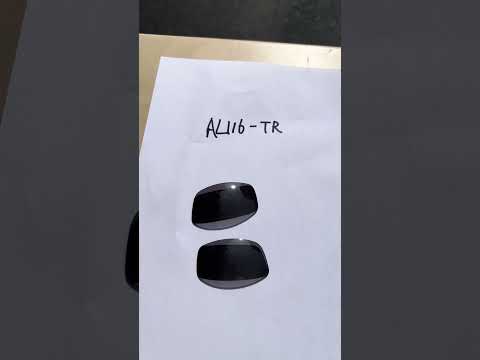
Test them in four easy steps
- Head outdoors into direct sunlight — a bright day works best.
- Give it 30–60 seconds. The lenses will darken to a full sunglass tint.
- Step back into shade and watch them clear up again over a minute or two.
- For proof, hold one lens in the sun and shade the other, then set them side by side.
Don't judge them indoors
The usual mix-up is testing the lenses inside, in the car, or by a window — exactly where UV can't reach them. Take them into open sun and the change is unmistakable. A few notes: warm weather speeds the reaction up, cold slows it down, and windshields keep them lighter while you drive.
Ready for a lens that shifts with the light? Shop Walleva transition lenses →